
Published
12 minute read
Aging doesn’t need to be dramatic to be frustrating, and you certainly don't have to wait until it's severe to give yourself a refresh. A little extra skin on the upper eyelid can make the eyes look smaller, while fullness in the lower lids can create under-eye bags that stay put no matter how much sleep, hydration, or concealer enters the picture.
Blepharoplasty corrects these concerns through careful eyelid surgery. The upper procedure can remove excess skin and sharpen the natural eyelid crease, while the lower procedure can address fat pads, puffiness, and shadows beneath the eyes. For patients who need a more complete correction, quad blepharoplasty treats the upper and lower eyelids together.
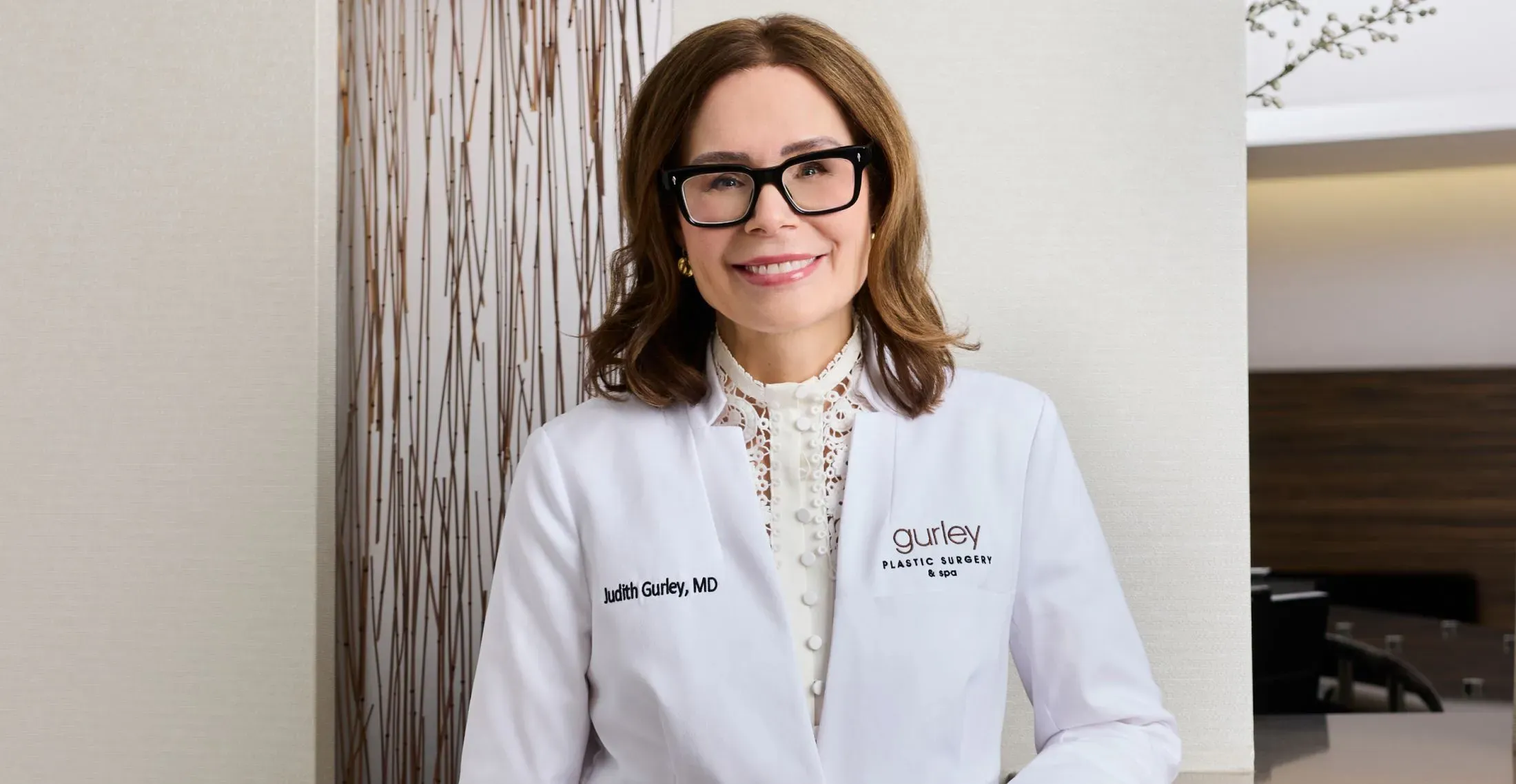
At Dr. Judith Gurley Plastic Surgery & Medical Spa, this surgery is performed by Dr. Gurley herself, a board-certified female plastic surgeon with extensive experience in facial surgery. Her work around the eyes is grounded in technical control, artistic planning, and a clear understanding that patients want to look refreshed, never overdone.
The eyelids are small, but they’re connected to a lot of moving parts. The brow, cheeks, fat pads, muscle, and skin quality all support how rested or tired the eyes appear. A heavy upper lid may come from excess eyelid skin, a low brow, eyelid ptosis, or a combination of these concerns. Puffiness beneath the eyes may come from bulging fat pads, loose skin, hollowing, or changes in the cheek beneath it.
That’s why Dr. Gurley doesn’t plan blepharoplasty by looking at one fold of skin and calling it a day. She studies your eyes and the surrounding areas to determine what needs to be removed, what needs to stay, and where the surrounding contours may need support.
Eyelid surgery is technical, but the contour planning is artistic. Removing excess skin from the upper eyelid can help the eyes look more open, but removing too much can create a hollow or pulled appearance. Reducing fat in the lower lids can soften under-eye bags, but taking too much can make the area look older. The best plan of action takes both anatomy and expression into consideration.
Upper blepharoplasty focuses on the upper eyelid, where excess skin can fold over the natural eyelid crease or rest near the lashes. Patients may notice that their eye makeup disappears into the fold, their eyes look smaller in photos, or they feel like they’re lifting their brows throughout the day to compensate for heaviness.
During upper eyelid blepharoplasty, Dr. Gurley places the incision along the natural eyelid crease. This surface incision heals with a very fine line that becomes almost invisible for many patients once healing is complete. Through that incision, she can remove excess eyelid skin, refine the upper lid, and address excess fat when needed.
Some patients who think they need upper eyelid surgery may also have brow ptosis, which means the brow has dropped and is contributing to heaviness. In that case, Dr. Gurley may talk through the role of a brow lift or internal brow support. The point is to correct the actual source of the concern, rather than over-removing eyelid skin to compensate for a brow issue.
Lower blepharoplasty focuses on the lower eyelids, where under-eye bags, puffiness, and shadows can make the face look tired even when the rest of the skin looks healthy. This area needs a measured hand because the lower eyelid has to maintain support, shape, and softness.
Dr. Gurley typically places the lower lid incision inside the eyelid, a technique called a transconjunctival incision. Since the incision is hidden inside the lower lid, it can’t be seen from the outside. This approach also allows her to access bulging fat pockets in a safer, cleaner way without creating an external scar beneath the lash line.
For the right patient, lower eyelid blepharoplasty can smooth puffy fat pads and improve the transition between the lower lids and cheeks. If the area has shadows from volume loss, removing fat alone may leave the under-eye looking hollow. That’s where Dr. Gurley’s planning becomes especially valuable. She evaluates the full contour beneath the eye before deciding how much to remove, how much to preserve, and when volume restoration should be added.
Quad blepharoplasty treats all four eyelids, meaning both upper and lower lids. This option can work well for patients who have heaviness above the eyes and puffiness or bags beneath them. Treating the upper and lower areas together can create a more balanced result because both parts of the eye area are being refreshed in the same surgical plan.
Dr. Gurley’s experience with quad blepharoplasty is important because this procedure requires your surgeon to think across the whole eye area. The upper eyelid, lower eyelid, brow, cheek, and outer corner of the eye all need to work together. When the upper lids are opened, and the lower lids are smoothed with the same level of control, the face can look rested in a way that still feels natural.
A strong quad blepharoplasty plan considers proportion, contour, and where your eye area has lost its younger shape. Depending on the patient, this could mean removing excess skin, adjusting fat pads, adding fat grafting, using laser resurfacing, or combining several small refinements to create one cohesive result.
Dr. Gurley commonly prefers combining blepharoplasty with fat grafting when the under-eye area has shadows, hollowing, or a sharp transition into the cheek. This is especially useful in lower eyelid surgery because aging around the eyes isn’t always caused by extra tissue. Sometimes the issue is loss of support.
The fat used for grafting comes from the patient’s own body through liposuction. This is routine for a board-certified plastic surgeon, but it still requires proper equipment, training, and surgical judgment. Once collected, the fat can be prepared as microfat or nanofat, depending on what the area needs.
Microfat can help restore volume and rebuild youthful contours around the lower lids and cheeks. Nanofat may help improve skin quality, tone, and texture, especially in thin or crepey areas. Around the eyes, small adjustments carry a lot of visual weight, so the goal is precision rather than fullness.
Dr. Gurley uses fat grafting to soften shadows and rebuild the eye area in a natural way. The intention is never to make the under-eye look puffy or filled. The intention is to restore smoother contours so the lower lids and cheeks blend in a more youthful, believable way.
Lower blepharoplasty can address bulging fat pads and under-eye bags, but it doesn’t automatically tighten the surface of the skin. If the lower eyelid skin has fine lines, crepiness, sun damage, or laxity, Dr. Gurley may recommend CO2 laser resurfacing as part of the plan.
She considers CO2 laser resurfacing the gold standard for skin tightening and collagen building around the lower eyelids. It can improve texture, soften fine lines, and help the skin contract after the deeper puffiness has been corrected. This combination can make the overall result look more complete, especially for patients whose lower eyelid concerns include both fat pockets and skin looseness.
Because the laser is used near the eyes, protection is essential. Dr. Gurley uses special prepping solutions and mechanical protection to protect the eye during treatment. The same level of care applies if the patient is awake, under twilight anesthesia, or asleep.
Patients tend to feel better when they know they have options. Blepharoplasty can be performed with the patient awake, under twilight anesthesia, or asleep, depending on the procedure, the patient’s comfort level, and the surgical plan.
Some patients feel comfortable having upper blepharoplasty with local anesthesia. Others prefer twilight anesthesia so they’re relaxed but not fully asleep. Patients having quad blepharoplasty, lower eyelid blepharoplasty with fat grafting, or laser resurfacing may prefer deeper anesthesia. Dr. Gurley reviews each patient’s medical history, preferences, and treatment plan before recommending the safest choice.
This part of the conversation is handled with care because surgery around the eyes can make people nervous. Dr. Gurley explains what to expect, how the eyes are protected, and how the procedure will be performed so patients can make a confident decision.
The eye area requires a serious safety protocol. Dr. Gurley uses special prep solutions and mechanical protection to protect the eyes during blepharoplasty and laser resurfacing. This protection is used regardless of the anesthesia choice.
This matters because eyelid surgery is performed close to delicate structures. The skin is thin, the muscle is precise, and the eyes need to be protected at every stage. Choosing a board-certified plastic surgeon with experience in facial surgery gives patients a higher level of planning, sterility, and surgical judgment.
For Dr. Gurley, safety and beauty belong in the same conversation. A result has to look good, heal well, and preserve function.
Recovery after eyelid surgery is usually easily manageable, though patients should expect some swelling and bruising during the first week. The eyelids may feel tight, dry, or sensitive as healing begins. Some patients notice temporary light sensitivity or blurred vision, and contact lenses may need to be paused until the eyelids feel comfortable again.
Dr. Gurley gives detailed instructions for recovery based on the exact procedure performed. Cold compresses, keeping the head elevated, avoiding strenuous activity, and attending follow-up appointments all help support healing. Patients usually start to look more like themselves as swelling improves through the first few weeks, while final results continue to settle over time.
The eyelids heal in stages. Early improvement can be encouraging, but the refined result takes patience as the tissues soften and the incision lines fade.
Blepharoplasty is one of the longer-lasting facial procedures. In many cases, eyelid surgery lasts a lifetime and doesn’t need to be repeated. That’s exactly why Dr. Gurley believes it needs to be done right the first time.
The face will continue to age, and the skin around the eyes will keep changing over the years, but the excess skin and fat pads corrected during surgery generally don’t return in the same way. Good skincare, sun protection, and maintenance treatments can help preserve the result.
Patients who have lower eyelid skin changes may benefit from CO2 laser resurfacing or other skin treatments over time to support collagen and texture. These treatments can help maintain the quality of the eyelid skin without repeating surgery.
Some patients come to Dr. Gurley after having blepharoplasty elsewhere and feeling unhappy with the result. Their eyelids may look hollow, uneven, pulled, rounded, or still too heavy. Revision surgery around the eyes can be complex because the tissue has already been altered, and scar tissue may be present.
Dr. Gurley is well-versed in revision blepharoplasty. She looks carefully at the eyelid crease, remaining skin, fat balance, lower eyelid position, and overall eye shape before recommending a plan. In some cases, revision may involve removing leftover excess skin. In others, it may require restoring volume with fat grafting, improving contour, or supporting the lower lids.
Revision conversations need honesty. Dr. Gurley is careful about what can be improved, what should be left alone, and how to approach the area safely. Patients appreciate that directness, especially when they’ve already been through a surgery that didn’t give them the outcome they wanted.
Many patients assume they should wait until the upper eyelids interfere with vision before considering blepharoplasty. That’s one path, but it isn’t the only one.
Plenty of patients choose eyelid surgery for cosmetic reasons long before vision becomes an issue. If the upper eyelid feels heavy, the lower lids look puffy, or the eye area makes the face look tired, a consultation can help clarify what’s causing the concern and which options make sense.
Being proactive allows patients to enjoy the look they want now. It also gives Dr. Gurley the chance to create a more refined plan before the tissue becomes more lax or the changes become more advanced.
Patients choose Dr. Gurley for her surgical skill, but many also appreciate her presence in the room. As a female plastic surgeon, she understands how personal facial surgery can feel, especially around the eyes. Patients may want improvement without a dramatic change, and they may be worried that eyelid surgery will make them look different instead of rested.
Dr. Gurley’s approach is direct, warm, and thoughtful. She listens to what bothers the patient, explains what she sees, and builds a plan around anatomy rather than pressure. Her goal is to help patients feel informed and comfortable before making any decision.
That welcoming style is part of the practice. Patients are treated with respect, privacy, and patience, from consultation through recovery.
Blepharoplasty can make the whole face look more rested, but the details decide the outcome. Upper blepharoplasty can lighten a heavy upper lid, lower blepharoplasty can soften under-eye bags, quad blepharoplasty can refresh the upper and lower eyelids together, and fat grafting or CO2 laser resurfacing can improve the contours and skin quality around the eyes.
The best plan depends on the patient’s anatomy, goals, and skin quality. Dr. Gurley performs each procedure herself, using careful incision placement, thoughtful contour planning, and the surgical judgment that comes from deep experience with the face.
If you’re considering blepharoplasty, upper blepharoplasty, lower blepharoplasty, or quad blepharoplasty, schedule a consultation with Dr. Judith Gurley Plastic Surgery & Medical Spa. You’ll receive clear guidance from a board-certified female plastic surgeon who understands the technical and personal sides of eyelid surgery.