

Published
8 minute read
Breast augmentation usually starts with a simple thought: you want your shape to feel more balanced. Maybe your breasts have always felt smaller than you wanted, maybe pregnancy or weight changes took away volume, or maybe one side has always looked different from the other. The choice that follows is personal, so the conversation should reach beyond cup size.
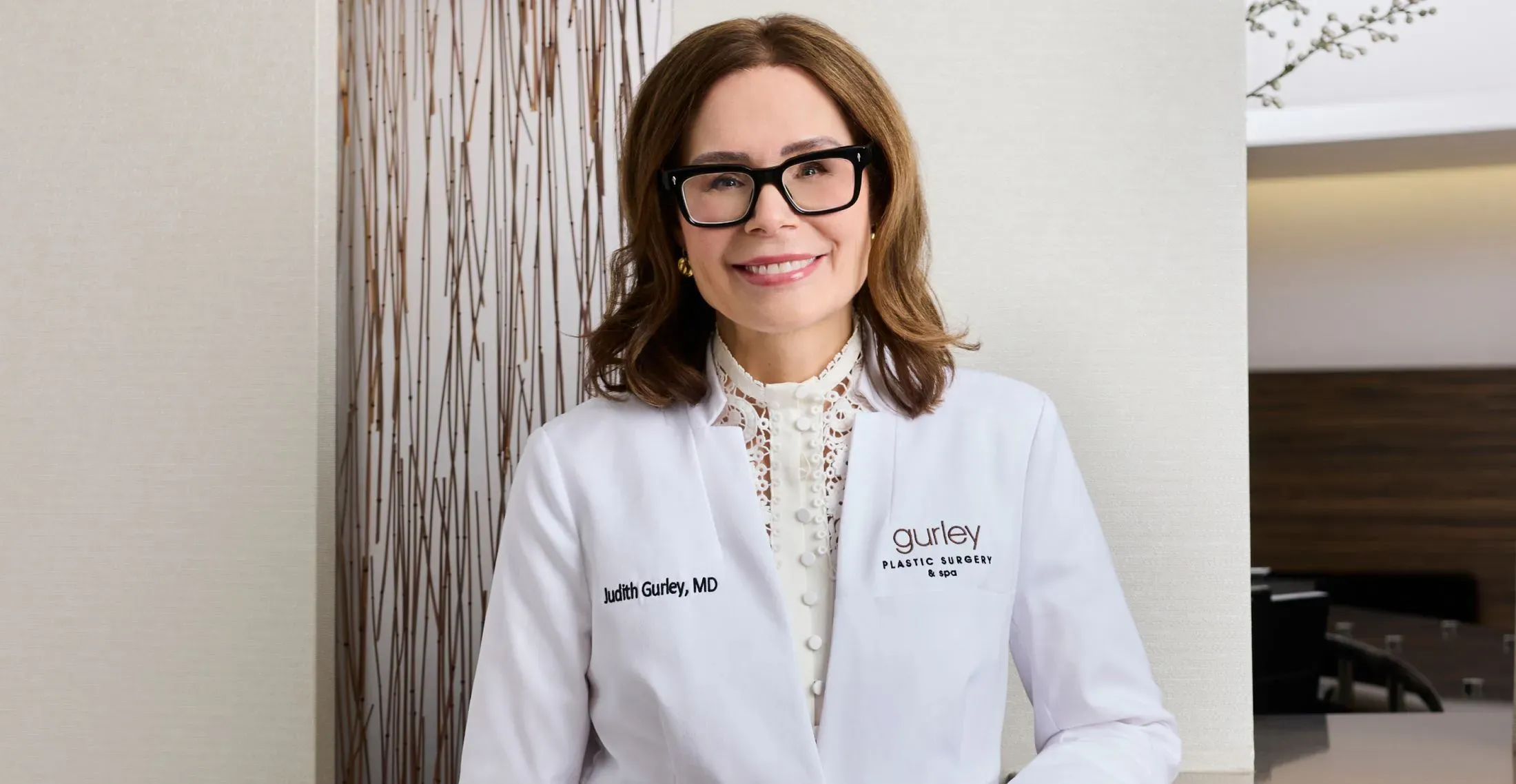
At Dr. Judith Gurley Plastic Surgery & Medical Spa, breast augmentation is planned by Dr. Judith Gurley herself, a board-certified female plastic surgeon with more than 25 years of experience in breast surgery. She looks at your frame, skin quality, existing breast tissue, lifestyle, and the way you want your result to feel in real life.
A beautiful result comes from choosing the right implant, pocket, incision, and overall approach for your body. Dr. Gurley creates breast proportions that feel feminine, tasteful, and natural for the person in front of her.
Breast augmentation uses implants or fat transfer to add volume, improve symmetry, and enhance breast shape. In implant-based surgery, Dr. Gurley creates a pocket for the implant, places it with careful attention to position and proportion, and closes the incision so the scar can heal as discreetly as possible.
Surgical judgment becomes especially important here. The same implant can look different on two different patients because chest width, tissue thickness, nipple position, skin stretch, and natural asymmetry all affect the final appearance. Dr. Gurley studies those details before recommending size, profile, placement, and incision location.
Many patients also need a conversation about breast lift surgery. Implants add volume, but they do not correct significant sagging on their own. If the nipple sits low or the skin envelope has stretched, a breast augmentation and lift may create a better shape than an implant alone.
Implant choice starts with fit, tissue support, and the look you want over time.
Dr. Gurley offers Motiva breast implants and has chosen smooth or non-textured implants for her cosmetic breast surgery patients for more than 25 years. Motiva implants are known for a soft feel, natural movement, and modern safety features. Their gel is made to adapt to the body, which can help the breast look more natural in different positions.
Patients may discuss implant size, projection, shape, and feel during consultation. Projection refers to how far the implant comes forward from the chest. A higher projection can create more fullness, while a lower or moderate projection may suit patients who want a softer slope. The right answer depends on your chest width, tissue coverage, and personal taste.
Dr. Gurley also talks through the trade-offs. A larger implant may create more dramatic volume, but it can also place more stress on the tissues over time. A smaller implant may feel more natural and age more gracefully, but it may not give enough fullness for the patient’s goals. The strongest choice respects both anatomy and preference.
Silicone gel implants are filled before surgery and are known for a softer, more breast-like feel. They tend to move and settle in a more natural way, especially when the implant size and profile fit the body well, though they do require appropriate long-term follow-up, including rupture screening based on current FDA guidance.
Motiva is the implant line Dr. Gurley offers for many cosmetic breast augmentation patients. These smooth implants are designed with a soft gel feel and natural movement in mind. Dr. Gurley’s experience with smooth implants helps her choose the size, profile, and placement that make the most sense for each patient’s frame.
Saline implants are filled with sterile saltwater after placement and can be a great option for patients who want a smaller incision or who prefer an implant that visibly deflates if the shell leaks. They usually feel firmer than silicone gel implants, so tissue coverage and placement become especially important.
Fat transfer uses your own fat to create a subtle increase in breast volume. It can be used on its own for modest enhancement or paired with implants to soften edges, improve asymmetry, or support a more blended result.
Implant placement is one of the biggest decisions in breast augmentation. An implant can be placed above the muscle, beneath the breast tissue, or below the pectoral muscle. Both approaches can be appropriate, depending on the patient.
Dr. Gurley may recommend above-the-muscle placement for many first-time patients when the tissue coverage, implant choice, and goals make it a good fit. This approach can avoid cutting into the pectoral muscle and may allow for a quicker early recovery. With modern smooth implants such as Motiva, above-the-muscle placement can be a strong option for selected patients who want natural movement and a softer recovery.
Below-the-muscle placement may still be better for patients with thinner tissue, certain implant choices, or a higher risk of visible implant edges. Dr. Gurley will explain which placement gives your body the best chance at a smooth, stable, natural-looking result.
Every breast augmentation requires an incision, but scar planning should be meticulous. Common incision locations include the fold under the breast, the border of the areola, or the underarm. The best choice depends on implant type, anatomy, risks, and whether a lift or other reshaping is being performed.
Dr. Gurley discusses incision placement during consultation and explains why one approach may be better for your body. Her priority is safe implant placement, precise pocket creation, and a scar that heals in a discreet location whenever possible.
Dr. Gurley also considers how the implant is handled before it ever reaches the pocket. Dr. Gurley’s Motiva breast implant page describes the use of a sterile delivery funnel to place the implant without direct contact with the skin or gloves. This supports sterility and protects the implant during placement.
Some patients want a subtle enhancement without implants. Others want the fuller shape that implants can provide. Fat transfer breast augmentation uses liposuction to take fat from another area of the body, process it, and place it into the breasts for natural volume.
Fat transfer can be a good option for patients who want a modest increase and have enough donor fat. It can also pair beautifully with implants when a patient needs softening around the edges, correction of asymmetry, or a smoother transition between the implant and natural tissue.
Dr. Gurley will be honest about what fat can and cannot do. Fat transfer does not create the same predictable volume as an implant, and some transferred fat will not survive. For the right patient, though, it can improve contour and make the breast feel more natural.
Breast implants are medical devices, so the decision should include a real discussion of safety, monitoring, and long-term expectations. The FDA requires a patient decision checklist so patients understand the risks, benefits, and device-specific information before receiving breast implants. Silicone implants also require appropriate follow-up for rupture screening over time.
Dr. Gurley takes this part of the process seriously. Patients should understand possible risks such as capsular contracture, implant rupture, infection, changes in sensation, scarring, asymmetry, and the possibility of future surgery. That conversation should feel steady and clear, giving patients the information they need before surgery.
Choosing a board-certified plastic surgeon gives that decision the seriousness it deserves. Breast augmentation is common, but it is still surgery. The technical details, sterility, implant selection, and long-term plan all affect the final result.
Dr. Gurley brings the perspective of a female plastic surgeon who has spent decades helping women make careful, personal choices about their bodies. She understands that breast augmentation can be exciting and emotional at the same time. Patients may want more volume, but they also want to feel like themselves. They may want a noticeable change, but not a result that feels out of sync with their frame.
Her approach is warm and direct, with close attention to the details patients actually live with. She does not rush the implant decision, and she approaches breast augmentation as a highly individualized operation. She looks at the whole body, listens to the way the patient describes her goals, and builds a plan that fits.
Dr. Gurley performs breast implant replacement, implant removal, breast lift, asymmetry correction, and other breast procedures, so she understands how implant decisions age over time. That experience helps her plan primary breast augmentation with the future in mind.
The best breast augmentation plan should feel clear before surgery day. You should understand your implant options, why a certain size or profile is recommended, where the implant will sit, where the incision will be placed, and what kind of recovery to expect.
If you’re ready to talk about your options, schedule a no-pressure consultation with us today. Dr. Gurley can walk you through the choices that matter most, from implant type and placement to fat transfer, lift options, and long-term safety, so your result feels balanced, natural, and fully your own.